


A beginner’s guide to choosing the right Suzuki outboard for your boat
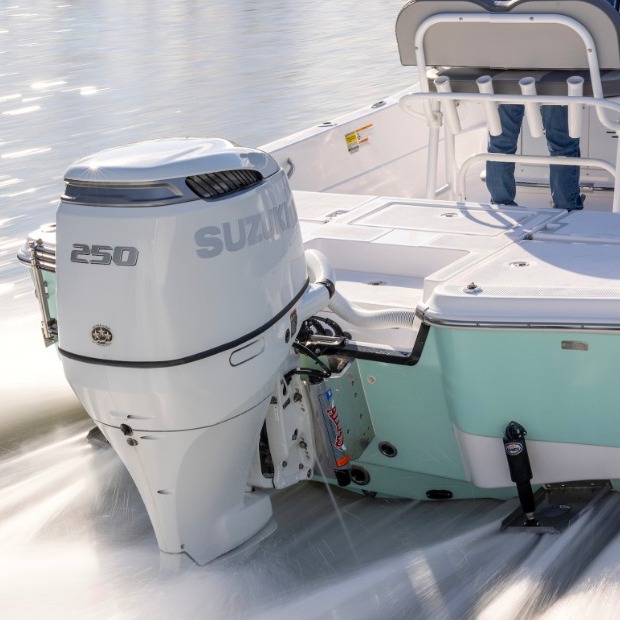
Choosing a new outboard motor can feel overwhelming, especially if you are buying your first boat or replacing an older engine.
With different horsepower options, shaft lengths, engine weights and technologies to consider, how do you know which outboard is right for your boat?
The answer isn’t simply “buy the biggest motor you can afford.”
The right outboard needs to match your boat, how you use it, and the conditions in which you operate.
Suzuki Marine offers a broad range of outboards in South Africa, from compact portable engines through to high-powered engines designed for larger boats.
Here are the key things to consider before choosing your next Suzuki outboard.
1. Start with your boat
Before looking at horsepower, start by looking at your boat.
Your boat’s manufacturer will specify a recommended or maximum horsepower rating. This is one of the most important pieces of information when selecting an outboard.
You should also consider:
- Boat length
- Hull design
- Maximum recommended horsepower
- Maximum engine weight
- Number of passengers
- Typical load
- Fuel and equipment carried
A motor that is too small may struggle to deliver the performance you need, particularly when the boat is heavily loaded.
On the other hand, choosing an engine that is too large or too heavy for the boat can create safety, handling and performance issues.
The goal is not maximum horsepower — it is the right horsepower.
2. How much horsepower do you need?
Horsepower is one of the first things most people look at when buying an outboard, but it should be based on the boat and its intended use.
A small tender or lightweight fishing boat may only need a compact portable outboard, while a larger offshore fishing boat may require significantly more power.
Suzuki’s South African range currently covers everything from the compact DF2.5S through to high-performance models such as the DF350A.
For example, Suzuki’s smaller engines are designed around portability and ease of use, while models such as the DF140B and DF150A offer substantially more power for larger vessels.
Your ideal horsepower depends on your particular hull, not simply what engine has the highest number on the cowling.
3. Consider how you use your boat
Think about what you actually do on the water.
Are you:
- Fishing offshore?
- Launching through the surf?
- Cruising along the coast?
- Boating on dams and rivers?
- Taking the family out for the day?
- Using the boat commercially?
- Carrying heavy loads?
- Towing water skiers or other watersports?
Different activities place different demands on an outboard.
A fishing boat that regularly carries several people, fuel, fishing equipment and tackle may benefit from an engine with strong low-end torque and good load-carrying capability.
For example, Suzuki’s DF60AV is a high-thrust model designed to provide additional thrust for heavier boats, while larger models such as the DF200A combine substantial power with a comparatively compact design.
4. Don’t forget shaft length
Shaft length is another important consideration that is sometimes overlooked by first-time boat owners.
The outboard needs to sit at the correct height on the transom so that the propeller and water intake operate correctly.
Suzuki outboards are available in different shaft configurations depending on the model, including short, long and extra-long options on applicable engines.
The correct shaft length depends on your boat’s transom height.
If you are unsure, don’t guess. Have your boat and existing installation assessed by an experienced marine technician before purchasing your engine.
5. Think about engine wweight
Modern outboards offer impressive power, but weight still matters.
Your boat’s transom needs to be capable of supporting the selected engine, particularly when moving from an older, lighter engine to a newer four-stroke.
This is especially important when repowering an older boat.
Suzuki’s DF200A, for example, was specifically designed to provide 200PS-class performance from a lighter, more compact four-cylinder configuration. Suzuki notes that its weight and compact design can make it suitable for lightweight boats and for repowering boats that previously used lighter two-stroke engines.
A proper assessment of the boat, transom and existing setup is therefore essential before upgrading.
ALSO READ | WHY CHOOSE SUZUKI OUTBOARDS?
6. Fuel efficiency matters
Fuel is one of the biggest ongoing costs of boat ownership, particularly for anglers and boat owners who spend long hours offshore.
When comparing outboards, don’t only look at horsepower. Consider how efficiently the engine delivers that power.
Suzuki’s Lean Burn Control System is designed to adjust the fuel and air mixture according to operating conditions, with the aim of improving fuel economy, particularly during cruising.
Choosing an efficient engine can make a meaningful difference to your running costs over the life of the motor.
7. Decide between tiller and remote control
The way you control your outboard will depend largely on your boat.
Smaller boats may be suited to tiller-steered outboards, where the controls are built directly into the motor.
Larger boats generally use remote steering and controls.
Suzuki offers both tiller and remote-control configurations across its range, depending on the model and application.
For larger, more powerful installations, Suzuki also offers Precision Control electronic throttle and shift technology on selected models. This replaces traditional mechanical control cables with electronic signals for smooth and precise operation.
8. Single or twin outboards?
If your boat is designed for multiple engines, you also need to consider whether a single or twin-engine setup is right for you.
Twin outboards can provide redundancy, increased power and different handling characteristics, but they also add weight, fuel consumption, maintenance and installation costs.
Suzuki offers technology such as Selective Rotation on applicable models, allowing certain outboards to be configured for regular or counter rotation. This can be particularly useful in twin-engine applications.
Again, the correct choice comes down to your boat and how you use it.
9. New outboard or repower?
You don’t necessarily need a new boat to get a better boating experience.
Repowering an existing boat with a modern Suzuki outboard can be an excellent option when the hull is still in good condition but the existing motor is outdated or no longer meeting your needs.
A repower can give you:
- Newer engine technology
- Improved fuel efficiency
- More reliable starting
- Better performance
- Modern controls
- Reduced noise and vibration
However, a repower should be approached as a complete setup rather than simply replacing one motor with another.
The engine, propeller, controls, electrical system, transom and boat should all be considered together.
10. Get professional advice before you buy
There is no single “best Suzuki outboard” for every boat.
The best outboard is the one that correctly matches your vessel, load, usage, performance requirements and budget.
That’s why getting professional advice before making a purchase can save you money and frustration later.
At Nauti-Tech Suzuki, we can help you work through the important considerations and find the Suzuki outboard that makes sense for your boat and your boating lifestyle.
From compact portable motors to high-performance engines, Suzuki’s South African range offers options across a wide range of boating applications.
Ready to find your perfect match?
Whether you’re buying your first outboard, upgrading your current motor or looking at a complete boat repower, talk to Nauti-Tech Suzuki before you buy.
We’ll help you choose the right power, the right setup and the right Suzuki outboard to get you back on the water with confidence.
Nauti-Tech Suzuki — #GetNauti.